

Introducing maidmisinformation.ca
A resource for understanding and responding to MAiD misinformation


For the past few months, we’ve been working on a new resource for people who want to know more about recognizing, understanding, and responding to MAiD misinformation.
That resource is now live at maidmisinformation.ca

We built this because misinformation about Medical Assistance in Dying is everywhere. It shows up in social media posts, podcasts, political debates, news stories, comment sections, advocacy campaigns, and everyday conversations. Some of it is obviously false. Some of it is more subtle. Sometimes the problem is not that every sentence is wrong, but that key context has been left out, emotionally loaded language has been used, or one unusual story has been made to sound like evidence of a much broader problem.
For people trying to make sense of MAiD in Canada, that can be incredibly difficult. And for those trying to respond to misinformation when they see it, it can be hard to know where to start.
So we wanted to build something practical.
Monthly MAiD Quiz
One of the first things we’d invite you to do is take the MAiD misinformation quiz.
Take the quiz, see how you do, and consider sharing it with someone who might find it useful. It can be a helpful starting point for conversations with friends, family, colleagues, students, or anyone who has encountered confusing or alarming claims about MAiD.

The rest of the site is built around a few main sections.
Common and Latest False Claims About MAiD

There is a section on common false claims about MAiD, where we address some of the recurring myths and misleading statements we see again and again. These include claims about MAiD medications, consent, disability, poverty, mental illness, patient suffering, and whether MAiD is being used as a substitute for care. Our goal is not simply to say that a claim is wrong, but to explain why it is wrong, what the evidence actually shows, and what context is often missing.
There is another section that lists recent examples of MAiD misinformation. These are specific claims that have been made, where they were shared, and what the truth is. We update this list regularly, so make sure to bookmark the page for future reference.
Recognize MAiD Misinformation
There is also a section on recognizing MAiD misinformation and the tactics used to spread it. Misinformation is not always obvious. Sometimes it relies on emotional manipulation. Sometimes it uses a single anecdote as though it proves a national trend. Sometimes it uses loaded words, false balance, slippery slope arguments, or selective data to make a weak claim sound persuasive. We want this section to help people recognize the shape of misinformation, not just memorize individual corrections.

Responding to MAiD Misinformation
Another section focuses on responding to MAiD misinformation. This is important because not every false claim needs the same response. Sometimes correcting misinformation is necessary and helpful. Other times, responding may only bring more attention to a claim that very few people would otherwise have seen. Before responding, it can be worth asking how many people have seen the claim, how many more might see it, how harmful it is, and whether a response will clarify the issue or simply amplify the misinformation.
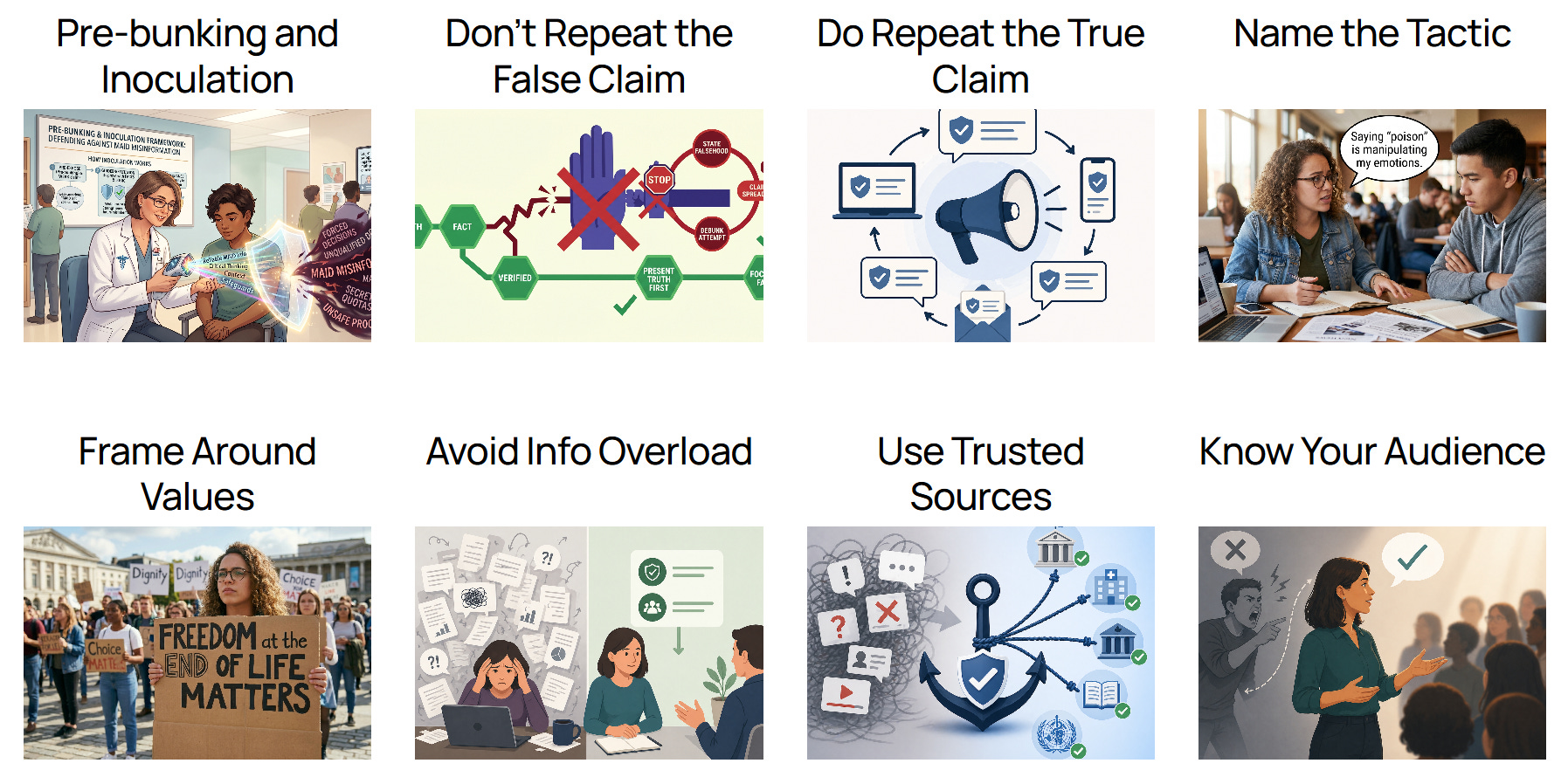
When a response is needed, how we respond matters. Overloading people with too much information can backfire. In fact, flooding the field with confusion, competing claims, or excessive detail can itself be part of how misinformation works. We want to help people respond in ways that are accurate, calm, proportionate, and useful.
Cognitive Biases and Logical Fallacies
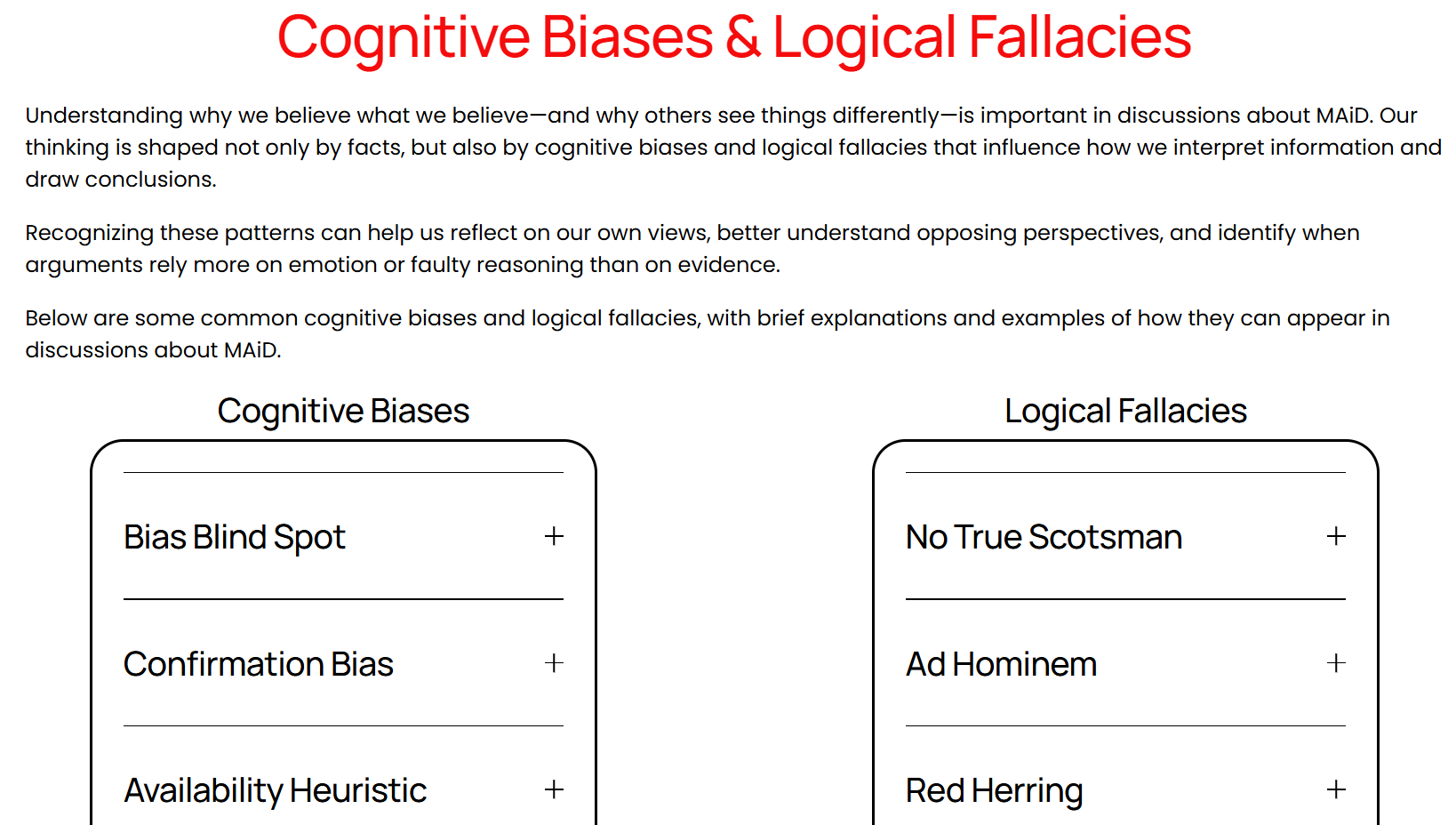
We have also included a section on cognitive biases and logical fallacies. That may sound a bit academic, but these concepts appear constantly in public conversations about MAiD. Repeated false claims can start to feel true. People may accept weak evidence more readily when it supports what they already believe. Someone’s actual position can be distorted into a strawman that is easier to attack. Understanding these patterns helps us see why certain arguments feel persuasive, even when they are not well supported.
Videos, Books, and Articles
We have also included a section for videos and books and articles that can help people go deeper.
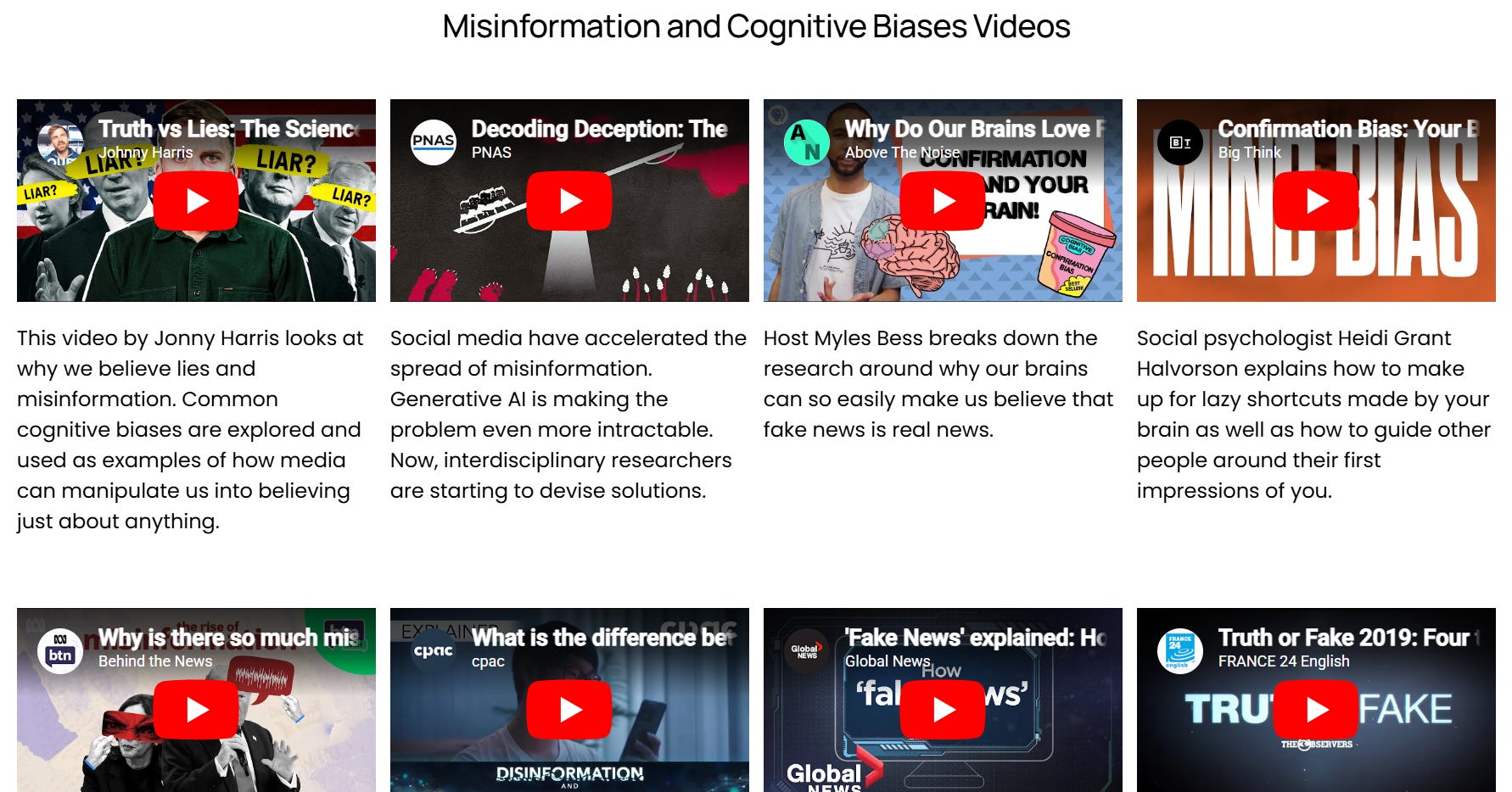
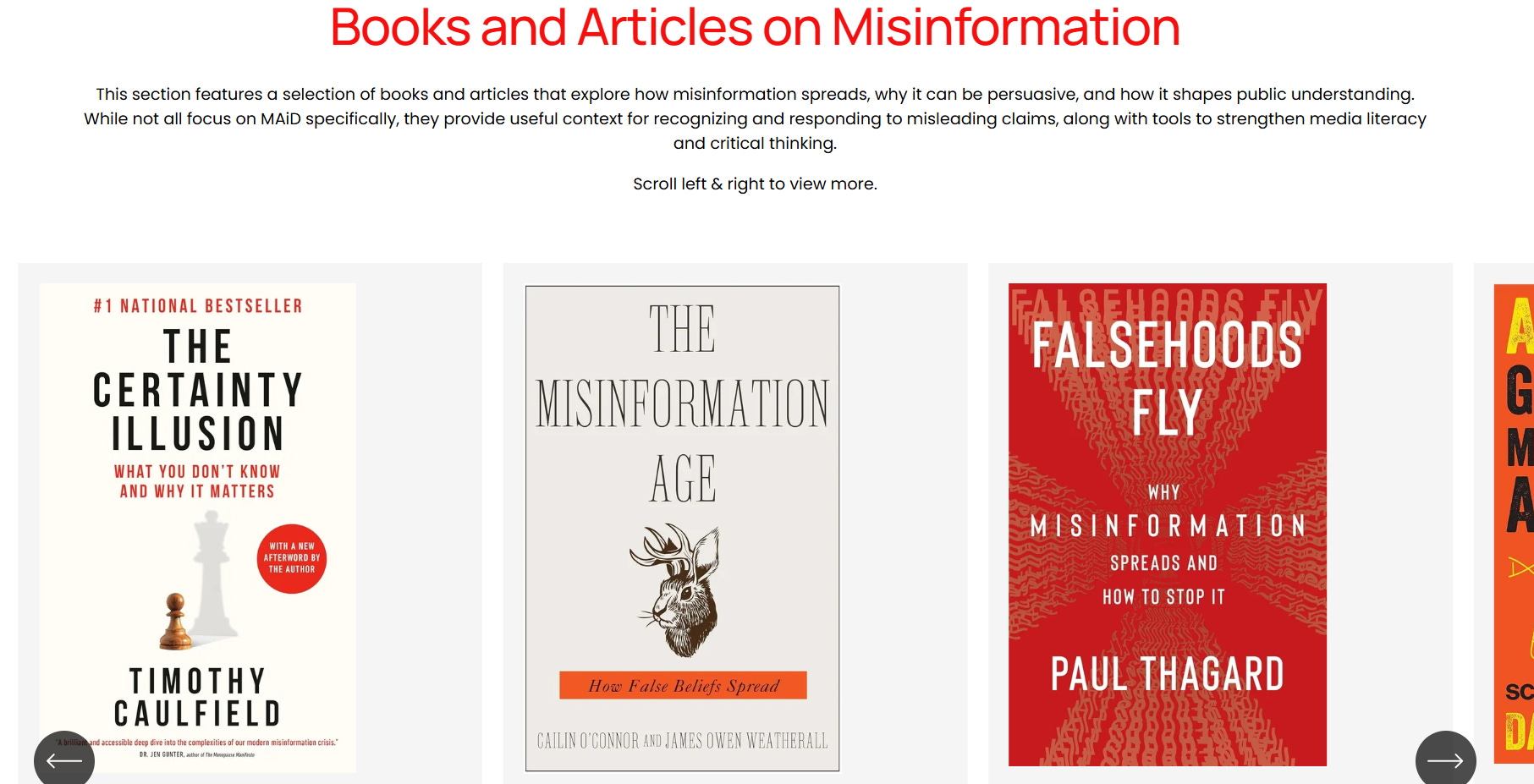
It includes resources that have helped shape our own thinking, as well as pieces we think may be useful for clinicians, educators, advocates, journalists, students, and members of the public. Some are directly about MAiD. Others are about general misinformation, communication, cognitive bias, or how complex issues get distorted in public debate.
How You Can Help
Our hope is that this site becomes more than something we built and maintain on our own. We would like it to become a community resource.
If you have seen a recurring false claim about MAiD, let us know. If you have expertise, research, examples, teaching resources, or ideas that could make the site stronger, we would love to hear from you. If there is a section that could be clearer, a topic we should add, or a resource you think others would benefit from, please send it our way.
Misinformation about MAiD affects real people. It affects patients trying to understand their options, families trying to support someone they love, clinicians providing lawful and compassionate care, and the broader public conversation about end-of-life choice in Canada.
People can, of course, have sincere ethical, religious, political, or personal objections to MAiD. Those disagreements should be discussed honestly. But disagreement is not the same as misinformation. Criticism is not the same as distortion. Concern is not the same as fearmongering.
People deserve accurate information. They deserve context. They deserve to understand what MAiD is, what it is not, and how public conversations about it can be manipulated.
That is why we created maidmisinformation.ca
Please visit the site, take the quiz, explore the resources, and share it with anyone who may find it helpful. Accurate information should be easier to find than misinformation.
Thank you all for all your support.
Paul and Kim
Your starting this approach is a great idea. Today it is quite possible for someone to advance their fame and fortune by becoming an anti-MAID advocate.
Since MAID is ultimately about voluntary choice of death it is easy for such advocates to fill their articles and columns with arguments about being pressured to die, being taken advantage of by governments to save money and other bogeymen.
Keep up the good work. It is much appreciated.
Might I jokingly suggest adding Alexandre Barils "Undoing Suicidism: A Trans, Queer, Crip Approach to Rethinking (Assisted) Suicide" to the book section?
Though with the governments plan to permanently bar MAiD MI-SUMC (Based on a globe and mail report last night), maybe Baril is onto something...