

"What Is His Code Status?"
A frightening event in hospital reminded us why these conversations are so important.


There are some questions you will never be completely ready to answer. But you must prepare for them anyway.
This is one of those questions.
Over the past month, I have had two major surgeries. Shortly after the surgery I had earlier this week, we experienced a frightening event—the kind of event that spurs you into action, as they often do.
After arriving on the unit from the post-anesthesia care unit (PACU), I was sitting up in bed chatting with Kim about everything that was going on when I suddenly started to feel strange. These things are hard to explain afterwards. There was just a sense that something was wrong.
At first, I didn’t say anything because I didn’t want to scare Kim. That was a mistake.
I started feeling worse and finally told her I didn’t feel well. I was nauseated and lightheaded, and my vision was beginning to tunnel. That was the last thing I remember.
Apparently, I became unresponsive. My skin changed to ashen grey, my breathing slowed and became shallow. Kim called for help. When the nurses arrived they could not find my pulse. That, combined with my shallow breathing and sudden unresponsiveness, warranted calling a code blue.1
There is a button on the wall that initiates the code. The alert goes to the hospital switchboard, which announces it over the speakers throughout the hospital. Wherever members of the code team are, they are notified and respond immediately.
A code blue is controlled chaos. Within moments, the room fills with people. Nurses, doctors, and respiratory therapists arrive. Phlebotomists, unit nurses, site leadership, clinical pharmacists, and clinical resource nurses and educators may also be present. It is an all-hands-on-deck kind of party.
Everyone in the room knows exactly what they're supposed to do, but to a loved one watching it unfold, it can feel like the entire world has suddenly been turned upside down.
When the first members of the code team entered my room, they asked Kim and the unit nurses the most important question:
“What is his code status?”
“Full code,” Kim answered immediately.
“Full code” essentially means: Do everything necessary.
Chest compressions. Intubation. Mechanical ventilation. Transfer to the intensive care unit (ICU). Whatever medically appropriate interventions are required to try to keep the person alive.
There are other “code” options, and the right code status depends on the person, their health condition, their goals and values, and what treatments are likely to help them.
The options we are most familiar with look something like the following, and will resemble the options used in many healthcare settings:
For the code status options discussed below:
CPR stands for cardiopulmonary resuscitation. Think chest compressions.
DNR stands for do not resuscitate—no chest compressions if the person’s heart stops.
Critical Care generally means treatment in an intensive care unit, or ICU-type setting.
DNR M1: No CPR. Supportive care, symptom management, and comfort measures only. Allow a natural death.
DNR M2: No CPR. M1 care as above, plus therapeutic measures and medications to manage acute reversible conditions within the current care setting. If the person is in residential care or hospice, transfer to an acute-care hospital would generally not occur except in special circumstances, such as a fracture.
DNR M3: No CPR. M2 care as above, plus admission to an acute-care hospital for medical or surgical treatment when indicated. No transfer to Critical Care.
DNR C1: No CPR. Maximum therapeutic effort, including transfer to Critical Care, but not including chest compressions, intubation, or mechanical ventilation.
DNR C2: No CPR. Maximum therapeutic effort, including transfer to Critical Care, intubation, and mechanical ventilation, but not including chest compressions.
CPR C2 (Full Code): The “do everything” option.
Confused yet?
You’re not alone.
Deciding what code status is right for you or someone you love can be one of the most difficult healthcare decisions you, your loved ones, and your care team make.
Code status is often discussed during a hospital admission, but it should be part of a larger and more important conversation related to advance care planning. The forms and terminology used for code status and advance care planning in hospitals can differ from the documents used in the community, and they vary from province to province in Canada and from country to country around the world. Don’t worry if the examples in this article don’t look exactly like the forms where you live. The principles are the same: think about your wishes, talk about them with the people you trust, and document them using the forms appropriate for your jurisdiction and care setting.
As many of you know, Kim and I are registered nurses. She knows my code status. We have talked about it many times including what specific interventions I would want (and would not want) if certain medical events were to occur.
We are not strangers to these conversations.
And yet, at that moment, without warning, Kim was asked how far the medical team should go if my heart or breathing stopped.
Are you or your loved ones ready for that question?
Have you talked about what you would want if your health suddenly changed for the worse?
If you haven’t discussed your future healthcare wishes with the people closest to you—or put those wishes in writing—you are not alone. Only approximately half of Canadians report having had these conversations, while fewer than one in five have actually written an advance care plan.
Kim and I haven't written advance care plans.
As experienced as we are, and as often as we encourage other people to communicate their wishes, we were not as prepared for this event as we could have been.
As we should have been.
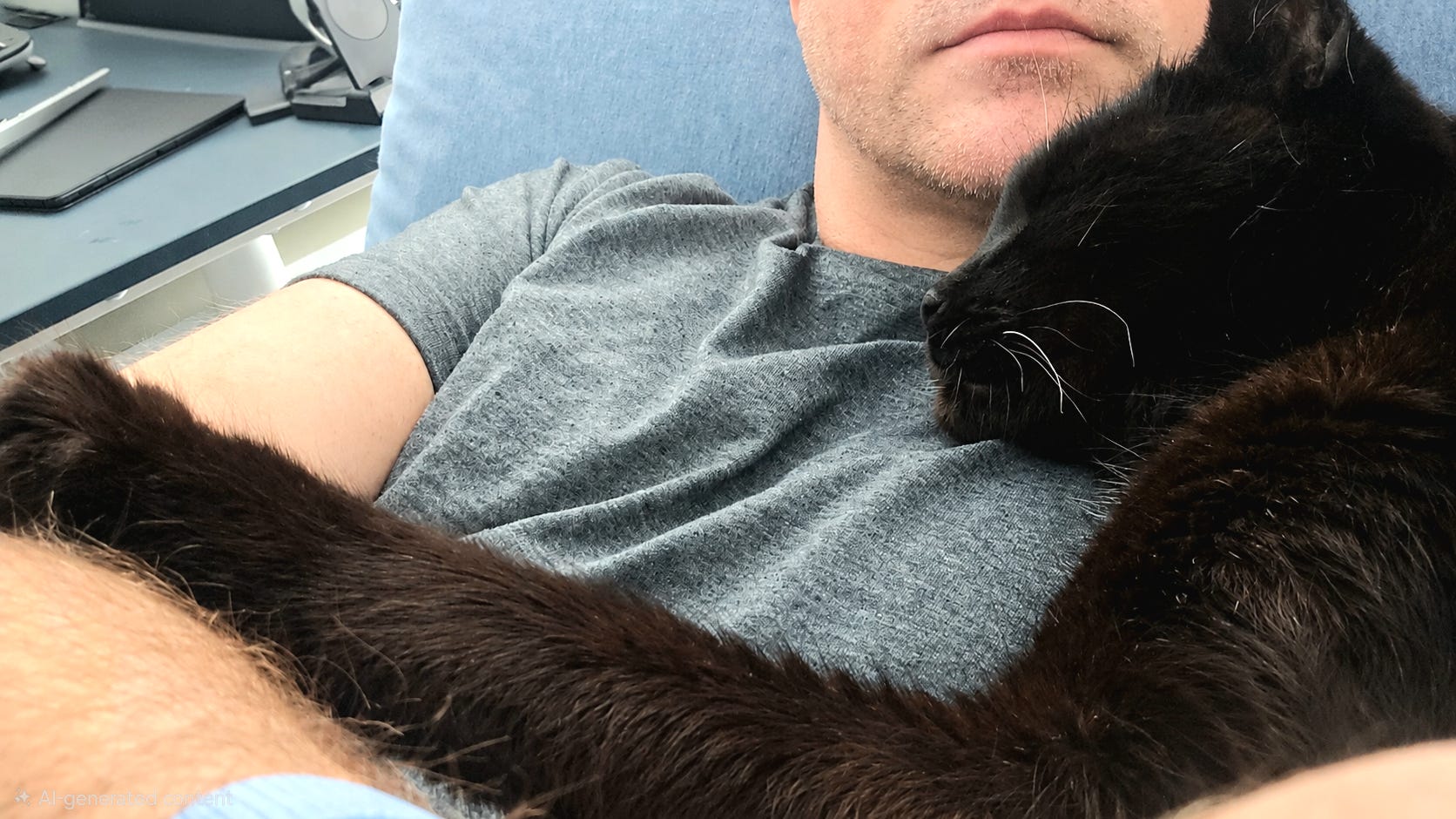
Obviously, I’m doing okay. I am writing this post from the hospital, where I will remain for at least the next few days. I look forward to getting home to more cuddles with Reggie (and his brother Marley).
My medical emergency turned out not to be too serious. It was likely related to some combination of blood loss during surgery, stress, hypotension, and being a little too “dry” to maintain adequate blood flow to my brain.
But in that moment, we did not know what was happening. And we did not know what was going to happen next.
Actually, I wasn’t aware of any of it. Kim was left to deal with all of that alone. I guess that is the point of this post.
Don’t leave your loved ones alone in that moment.
Prepare them for the decisions they may one day be asked to make if you are unable to make them yourself. Create a document that can guide them if someone suddenly asks:
“What is their code status?”
Or, more broadly:
“What would they want us to do now?”
That’s the lesson we’ve learned. We need to complete formal Advance Care Plans. Here in British Columbia, that can be found in the BC Ministry of Health’s Advance Care Planning Guide.
We’ve provided links to the different Advance Care Planning guides and webpages for the different provinces and territories below. But honestly, the best place to go for all that information is Dying with Dignity Canada’s Education & Resources page. There you’ll find everything from advance care planning materials and information about palliative and hospice care to caregiver supports, bereavement services, mental health and disability resources, community programs, and, of course, links to information about medical assistance in dying.
You may have noticed that, until now, we haven’t mentioned medical assistance in dying. That is because advance care planning is about much more than any one healthcare decision. The most important thing is that the people who may one day have to speak for you understand your goals, your values, and what matters most to you.
But, since much of our work focuses on MAiD, it’s worth mentioning one important point:
In Canada, you cannot request or consent to MAiD in an advance care plan or advance directive, and a substitute decision-maker cannot make that decision for you.
But that does not mean conversations about MAiD can’t be part of advance care planning discussions.
If you have strong feelings about MAiD—whether you would never consider it, whether you think you might, or whether you’re simply unsure—talk about those wishes with the people closest to you. Those conversations cannot authorize MAiD in the future, but they can help your loved ones better understand your values and the kinds of care that matter most to you if the topic ever arises.
Like every other advance care planning conversation, the goal is not to predict every future decision. It is to help the people who love you understand how you think about those decisions.
Thank you. Take care of yourself. Take care of each other.
Paul
Advance Care Planning Guides and Documents:
British Columbia; Alberta; Saskatchewan; Manitoba; Yukon; Northwest Territories; Nunavut; Ontario; Québec; New Brunswick; Nova Scotia; Prince Edward Island; Newfoundland & Labrador.
A code blue is called when a patient has a life-threatening medical emergency—usually when they unexpectedly become unresponsive, stop breathing, or their heart stops. Think of your favourite medical-show doctor yelling, “Can I get a crash cart in here?”
Side note: since nurses spend more time at the bedside than anyone else, we are often the ones who first recognize that a patient is deteriorating and call a code blue. A shoutout to all our fellow nurses out there.
Oh my goodness, Paul and Kim. I’m relieved to hear you are in good hands and what an important message.
I remember when I was working in retirement ( seriously sign of the times more long-term care), I threw my back out horribly and when I returned to work I was assigned modified duties. One of my assignments was to go through every resident’s file and ensure they were up to date
As I’m sure people understand, updating files is a mundane task that can get overlooked for years (especially in an understaffed, overworked facility) and I was surprised that many of the residents had full code status even if they had lived in the facility for 20 years and their age and health had changed drastically
Had I not updated these files, very old sick individuals would have been subject to full code legally. Of course, I spoke with each resident separately and they decided what option would best suit their needs.
I’m recovering from a surgery, myself, Paul I wish you healthy days ahead Kim needs you and so do we.
Looking forward to an eventual visit to see us.
Stay gold, my friend 💛
Gaye
Glad to hear that you are on the mend and that your frightening symptoms were not as serious as they initially appeared. Thank you for using the incident as a teaching moment for everyone. These discussions are not pleasant but how so very important they are to have with your loved ones!